ServicesSiding
Siding Repair and Replacement in Fort Wright
We check your siding panel by panel, probe the sheathing behind the worst spots and show you what we found before we recommend anything. Then you get a clear choice between repairing a section and residing the wall, with the reasons for each.
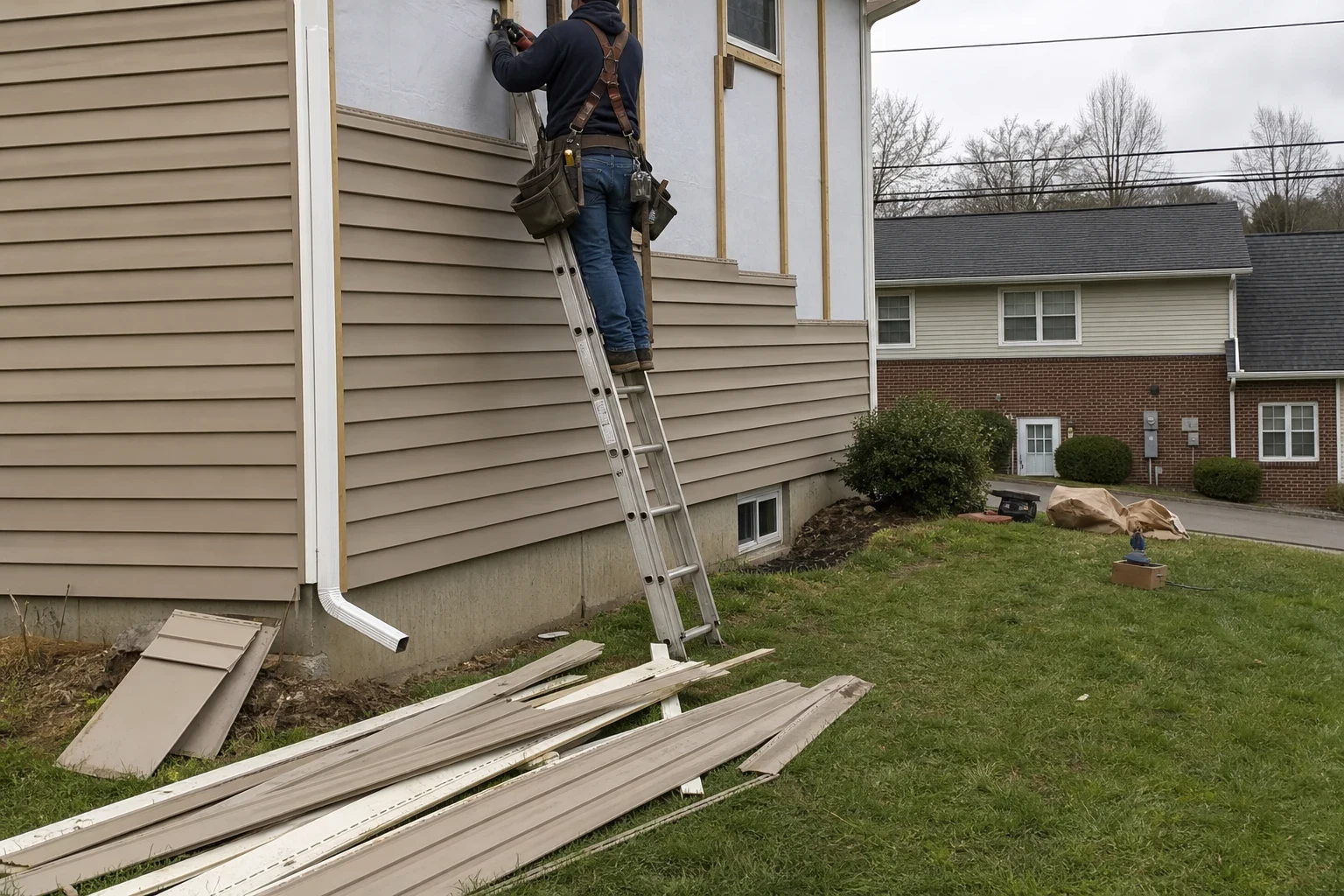
Siding Is a Water Shield, Not Just a Finish
Siding sheds most of the rain. The house wrap and flashing behind it catch the rest and send it back out. When either layer fails, water reaches the sheathing and framing, and the damage spreads long before it shows inside your home.
That is why we start at the wall, not the catalog. We look at how the panels were hung, where the trim meets the windows and where your roof edges die into a sidewall. A buckled run of vinyl nailed too tight is a repair. Soft sheathing under a whole elevation is a different job, and you deserve to know which one you have.
We are licensed and insured for siding work, and the same crew that handles our roof repair and gutters understands how water moves from the roof to the wall.
What Our Siding Work Covers
Panel and section repair
We replace cracked, dented or blown-off vinyl, aluminum and fiber cement panels. We try to match profile and color from your attic stock or a supplier, and tell you honestly when a match will not blend.
Full residing
Old siding comes off down to the sheathing so we can see what is there. We do not cover rot with a new layer.
Sheathing and house wrap
Soft OSB or plywood is cut out and replaced. New house wrap is lapped shingle style, top over bottom, and taped at seams so water drains out instead of in.
Window, door and trim flashing
We flash window and door openings with tape and head flashing, and wrap trim so end grain is not exposed to weather.
Kickout flashing at roof lines
Where a roof edge meets a sidewall, a small kickout flashing diverts runoff into the gutter. A missing one is one of the most common causes of rotted wall corners we see.
Signs Your Siding Needs Attention
Wavy or buckled vinyl
Vinyl expands and contracts with temperature and has to hang loose on its nails. When it is nailed tight, panels ripple in summer heat and crack in a cold snap.
Soft spots you can press in
Push on the siding near the bottom of a wall or under a window. If it gives, the sheathing behind it is likely wet or rotted.
Stains below a roof edge
Dark streaks or peeling paint running down from where a roof meets a wall usually point to missing kickout flashing or an overflowing gutter.
Gaps at trim and caulked joints
Open butt joints on fiber cement or shrunken caulk around window trim let water behind the face of the wall.
Chalky, faded or dented aluminum
Older aluminum siding wears thin, dents easily and loses its finish. Hail makes it worse.
Peeling paint inside on exterior walls
Bubbling paint or musty smells along an outside wall can mean moisture has already moved through the sheathing.
How a Siding Job Runs
- 1
Inspection at the wall
We walk every elevation, check how the panels are fastened and flashed, and probe any sheathing that looks suspect. Before we leave, you see the pictures we took and hear in plain terms what is letting water in.
- 2
Written estimate
The estimate separates panels, sheathing, wrap, flashing and trim, so you can see what each part of the job is and why it is there.
- 3
Protecting your home
We cover plants and foundation beds along the work area and keep ladders and debris off walkways. Openings are not left uncovered overnight.
- 4
Tear-off, repair and install
Damaged material comes off, the sheathing is repaired, wrap and flashing go on, then the new siding is installed to the maker's fastening spacing and clearances.
- 5
Cleanup and walk-through
We sweep for nails with a magnet, haul away old siding and walk the finished walls with you. Our work is backed by a 10-year labor warranty.
What Moves the Cost of Siding
Siding prices depend more on what is under the panels than on the panels themselves. We cannot price sheathing we have not seen, so the inspection comes first. If tear-off uncovers more damage than we expected, we pause, share pictures of the exposed wall and get your okay before any added work.
- Wall area and height
- Square footage sets the material count. Two-story walls and steep hillside yards need more staging and time.
- Material choice
- Vinyl, fiber cement and wood differ in material cost, weight and labor. Fiber cement needs cutting dust control and painted or prefinished trim.
- Sheathing condition
- Replacing rotted OSB or plywood adds labor and material, and it is the part most often hidden until tear-off.
- Trim, windows and corners
- Every window, door, outlet and inside corner needs its own flashing and trim pieces. A wall full of openings costs more than a plain one.
- Old layers and permits
- Removing more than one old layer adds disposal. Full residing may need a permit, which we pull when it is required.
Siding Questions We Hear Most
Something not covered here? (859) 251-7387
Can you match my existing vinyl siding?
Often, yes. We check the profile, exposure and color, and look for spare panels in your garage or attic. Vinyl fades over the years, so even the same color can look different on a sun-facing wall. If a match will stand out, we tell you before we install it.
Should I repair one wall or replace all of it?
It depends on what is behind it. If the damage is limited to a few panels and the sheathing is sound, a repair makes sense. If we find soft sheathing across a whole elevation or the siding is brittle everywhere, residing that wall usually costs less over time than repeated patches.
Can new siding go over the old siding?
We prefer not to. Covering old siding hides rot, traps moisture and makes window trim look sunken. Taking it off lets us fix the sheathing and install proper house wrap and flashing.
Will insurance cover hail damage to my siding?
Sometimes. Hail can crack vinyl and dent aluminum, and many policies cover that. We document the damage with photos and explain what we see, but your adjuster decides the claim. Our storm damage repair page covers that process in more detail.
Is your siding work warrantied?
Yes. Our siding installation and repairs carry a 10-year labor warranty. Material coverage comes from the siding manufacturer and varies by product, and we go over it with you.
Do I have to be home for the whole siding job?
No. Most of the work happens outside, so we can get on with it while you are at work. We do ask for a few minutes at the start to confirm which walls and trim are in the scope, and a short walk around the finished walls at the end. If tear-off exposes rotted sheathing, we send photos and wait for your go-ahead, so it helps to answer your phone that day.
Find Out What Your Siding Is Hiding
We will look at the panels, the flashing and the sheathing behind them, then explain what we found and what it would take to fix. Your estimate is free and given by phone after the visit.