ServicesRoof Replacement
Roof Replacement in Fort Wright, Done After a Real Inspection
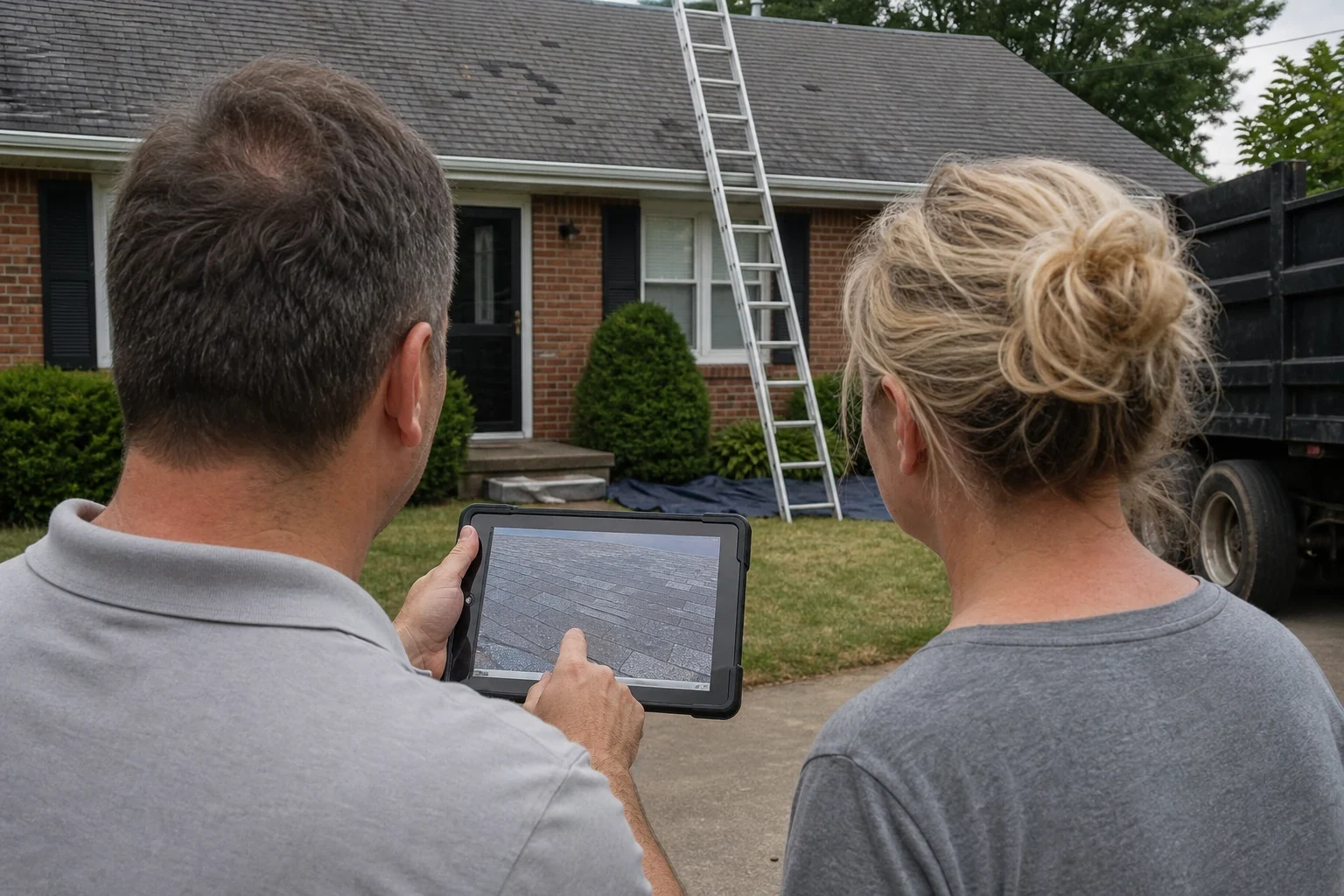
Before we recommend a new roof, we get on yours, check the shingles, flashing, vents and decking, and show you photos of what we found. If replacement is the right call, we tear off to the wood and rebuild every layer correctly.
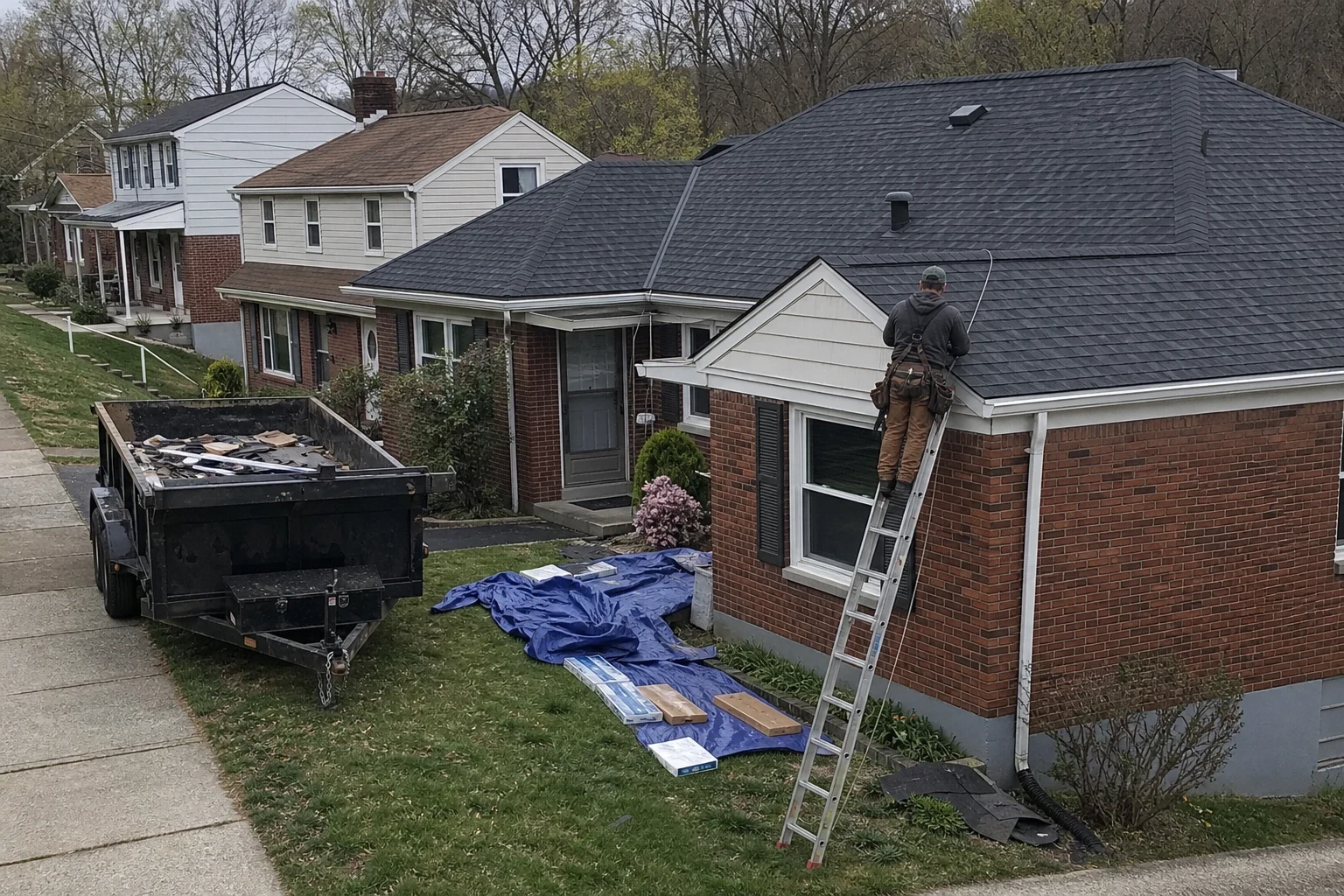
When a New Roof Is the Right Answer
A roof needs replacing when the shingles themselves are worn out, not just when one spot leaks. Asphalt shingles shed their granules with age, and once the asphalt mat beneath is bare to the sun, it dries, curls and cracks. Past that point, a patch on one slope just sends the water to the next weak spot nearby.
Every replacement conversation starts with a close look at your roof. If it has years left and the problem is a cracked pipe boot or a lifted ridge cap, we will tell you that and point you to roof repair instead. If the field shingles are failing across several slopes, or the decking has gone soft, we explain why replacement costs less over time than chasing leaks.
Our crews are licensed and insured, and we stand behind the installation with a 10-year labor warranty.
What Goes Into Your New Roof
- Full tear-off to the decking
- We remove every old layer, including any second layer left from an earlier reroof. Stacking new shingles on top of an old layer covers up soft wood and puts extra load on the rafters, so we strip it all.
- Decking checked board by board
- With the wood exposed, we walk and probe the sheathing. Soft, delaminated or rotted sections are cut out and replaced so the new nails have something solid to hold.
- Ice and water shield plus underlayment
- Self-adhering ice and water membrane goes along the eaves, in valleys and around penetrations, where freeze-thaw cycles push water back under shingles. Synthetic underlayment covers the rest of the deck.
- New flashing, not reused
- Drip edge, step flashing at walls, chimney flashing and pipe boots are replaced. Old flashing is often bent or corroded, and it is where most leaks on a newer roof start.
- Ventilation balanced for your attic
- We check intake at the soffits and exhaust at the ridge or vents. A hot, humid attic cooks shingles from below and feeds condensation in winter, so we correct the balance while the roof is open.
- Cleanup and magnet sweep
- Tarps protect your landscaping and siding during tear-off. At the end we run magnetic sweepers over the lawn, beds and driveway for stray nails.
Signs Your Roof May Need Replacing
Shingle coating washing away
Coarse, dark grit collecting where the downspouts empty is the mineral coating coming off your shingles. Once it is gone, sunlight reaches the asphalt directly and bald spots start opening up across the slopes.
Curling or cupped shingles
Edges that lift or centers that sink show the asphalt has dried out. Curled shingles catch wind and let rain blow underneath.
Stains in several rooms
A single wet spot tends to trace back to one flashing joint or a cracked pipe boot. Water marks showing up across several ceilings more often mean the underlayment has given out over a wide section.
A sagging roofline
A dip between rafters points to wet, weakened decking or, less often, a framing issue. Either way it needs a close look soon.
Daylight or damp in the attic
Light through the boards, dark water marks on the sheathing or frost on nail tips in winter tell us moisture is getting in or getting trapped.
What Moves the Cost of a New Roof
A replacement price comes from measurements and conditions on your specific roof, which is why we look before we quote. The written estimate breaks the job into separate lines, so materials, labor, disposal and permit fees are never lumped together. The one unknown is the decking, so we explain up front how any rotted wood we uncover is priced.
Size and pitch
Square footage sets the material count. Steep slopes need harnesses and roof jacks and take longer to work safely.
Layers to remove
A second or third layer of old shingles means more labor and more disposal weight.
Decking condition
Sheets of soft or rotted plywood found during tear-off are replaced, and the amount varies from roof to roof.
Shingle line and details
Architectural shingles, chimneys, skylights, dormers and valleys all add material and flashing work.
How a Replacement Job Runs
- 1
Roof check and photos
We check the roof surface, flashing, vents and attic, then walk you through photos of what we found. You get a plain answer on repair or replace.
- 2
Written estimate and materials
If you choose replacement, you get your estimate by phone and in writing, line by line, including how decking replacement is priced if we find rot. We help you pick a shingle line and color.
- 3
Permit and dates
If your city calls for a permit, we file for it and handle the paperwork. Then we pick a start date with a dry forecast and tell you when the crew and the dumpster will show up.
- 4
Tear-off and rebuild
Most homes are stripped and dried in on the first day so the house is never left open overnight. Decking repairs, membrane, underlayment, flashing, shingles and ridge vent follow in that order.
- 5
Final walk-through
We check every slope, sweep for nails and go over the finished roof with you, including the paperwork for your labor warranty.
Roof Replacement Questions
Can you just put new shingles over my old ones?
We do not install over existing shingles. A second layer hides soft decking, traps heat and keeps the new shingles from lying flat. Tearing off lets us see and fix the wood before it is covered again.
How long does a replacement take?
Most single-family roofs take one to two working days once materials are delivered. Steep pitches, extra layers or a lot of decking repair can add time. Weather sets the final schedule, and we will not open a roof with rain coming.
Do I need to be home during the work?
No, though we ask that someone be reachable by phone. We do suggest parking cars on the street or in the garage, and taking pictures and mirrors down from top-floor walls, because tear-off shakes the framing.
What does your warranty cover?
We provide a 10-year labor warranty on our installation. Shingle manufacturers carry their own material warranty, and we explain how the two work together during your walk-through.
Will you tell me if I don't need a new roof yet?
Yes. If the shingles have life left and the problem is local, we will show you the photos and recommend roof repair. Replacing a roof early is money you did not need to spend.
Find Out Where Your Roof Really Stands
We serve homeowners in Fort Wright and nearby towns like Fort Mitchell, Covington and Erlanger. Start with a free inspection, look at the photos with us and decide from there.