ServicesRoof Repair
Fort Wright Roof Repair, Diagnosed Before Anything Comes Off
Most leaks start a few feet from where the stain shows up. We trace the water path from the attic out, photograph what failed, and tell you plainly whether a repair will hold. Then we fix the flashing, shingles or vents that actually let water in.
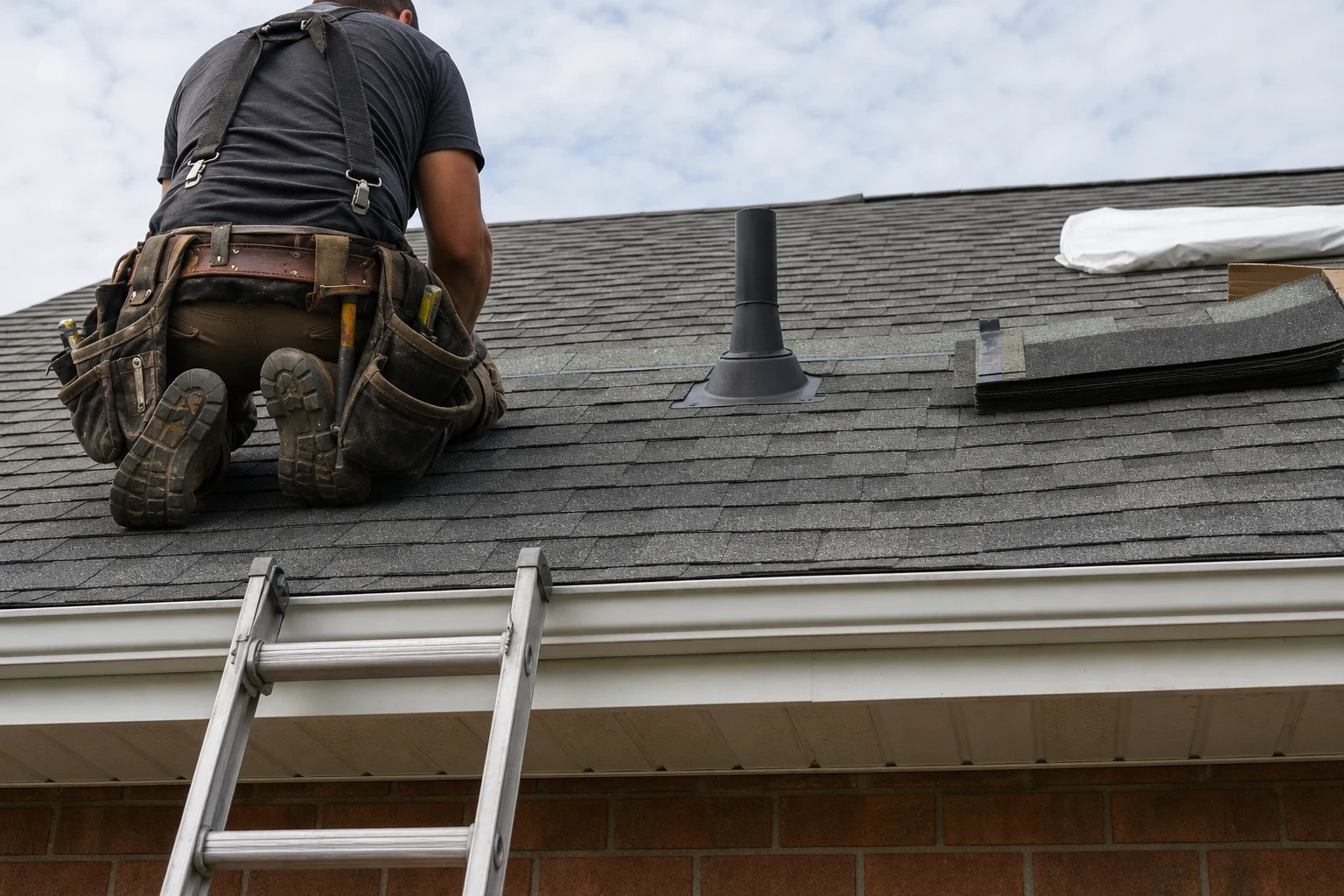
Repair or Replace: How We Decide
A targeted fix fits when the damage is confined to one area, the decking below is firm, and the nearby shingles still lie flat with their granules intact. Under those conditions, swapping a failed pipe boot or a run of step flashing puts the roof back in working order for far less than a new one. When the shingles are brittle or curling across whole slopes, or the decking is soft in several places, a patch only moves the next leak a few feet over. We will tell you that, and walk you through Roof Replacement instead.
Water rarely enters where it drips. It runs along the top of the decking or down a rafter before it finds a seam in the drywall. Northern Kentucky winters add another cause: freeze-thaw cycles and ice dams push meltwater back up under the eave shingles, where the roof was never built to shed it. That is why we start in your attic with a light and a moisture meter before we climb the ladder.
We are licensed and insured. As the work goes, we photograph the failed part and the new one in place, so you keep a record of what came off your roof, what went on, and the reason for each change.
What Our Roof Repair Work Covers
- Chimney and wall flashing
- Brick chimneys on older homes often have counterflashing set in mortar joints that have cracked or pulled loose. We reset or replace the step flashing and counterflashing so each course overlaps the next and sheds water outward, instead of relying on a bead of caulk that dries out in a few seasons.
- Pipe boots and roof vents
- The rubber collar on a plumbing vent boot cracks after years of sun, and water runs straight down the pipe. We swap the boot, check the box vents and ridge vent for cracked housings or missing fasteners, and seal the shingles back over the flanges.
- Shingle replacement
- Wind lifts tabs whose sealant strip has let go, and the crease left behind lets water in. We remove damaged shingles without tearing up good ones, nail the new ones in the manufacturer's nail zone, and hand-seal them to the course below.
- Valleys and eaves
- Valleys carry the most water on any roof, so worn shingles or open-cut gaps there show up fast as interior stains. At the eaves, we can add ice and water shield under the first courses when ice dams have been the cause.
- Rotted decking sections
- If the plywood or plank sheathing under a leak has gone soft, new shingles will not stay fastened to it. We cut out the damaged section back to the rafters and install new decking before we close the roof up.
Warning Signs Worth a Closer Look
Stains on a ceiling or wall
A tan or brown ring, even one that has dried out, tells you water reached the drywall at some point. The entry point usually sits upslope from the mark, often at a vent, chimney or valley.
Granules piling up in the gutters
A small amount after a new roof is normal. Heavy, dark sand in the downspout outlets on an older roof means the asphalt underneath is exposed to sun and will crack.
Lifted, creased or missing shingles
After a windy night, look for shingles with a straight horizontal crease or bare strips of felt. Creased tabs no longer seal and will tear off in the next blow.
Damp insulation or daylight in the attic
Wet, matted insulation or pinpoints of light around a nail or vent pipe mark an opening. Frost on the underside of the deck in winter can also point to a ventilation problem.
Drips only in wind-driven rain
A leak that shows up in sideways storms but not in steady rain usually traces to flashing at a chimney or sidewall, where water is being pushed behind a loose edge.
How a Repair Goes, Start to Finish
- 1
Attic and roof inspection
We start inside, following stains, wet insulation and nail tips back toward the entry point. Then we go up and check the shingles, flashing, vents and valleys around that area, plus the rest of the slopes for anything else in early failure.
- 2
Photos and plain findings
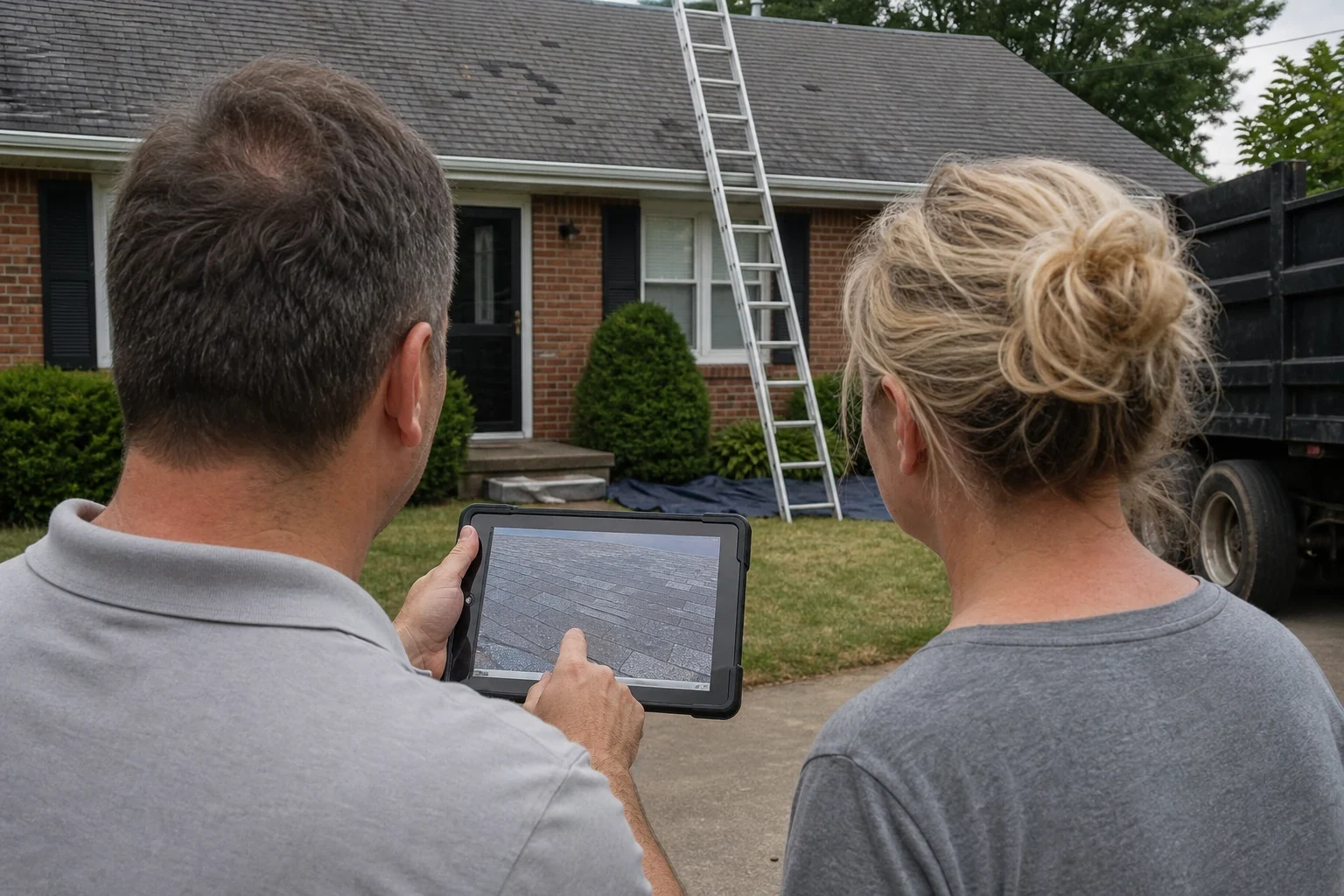
We show you the photos and explain the cause in everyday terms. When a targeted fix will last, you hear that first. When the shingles or decking are too far gone for patching, we explain why and what the alternative involves.
- 3
A written estimate
Our estimate lists each item: which flashing, how many shingles, whether decking is involved. You decide on your own time, with no pressure to sign on the spot.
- 4
Repair day and cleanup
We protect plantings and set tarps below the work area, make the repair, and seal it. Before we leave, we run a magnet over the yard and driveway for stray nails and send you the after photos.
What Moves the Price of a Roof Repair
We price a repair from what the inspection turns up, so we look before we quote. One ceiling stain might trace to a cracked pipe boot, while another in the same spot comes from rotted decking under a valley. First-time customers can also use our current offer: Limited Time — $50 Off Your First Service Call.
- Cause and extent
- Replacing one pipe boot is a short job. Rebuilding chimney flashing on all four sides, or correcting several problems at once, takes more material and time.
- Roof pitch and access
- Steep slopes need roof jacks, harnesses and more setup. Tight lots or hillside driveways can also affect how we stage ladders and materials.
- Decking condition
- If the sheathing under the leak has rotted, it has to be cut out and replaced. We cannot know that for certain until the shingles are lifted, so the estimate notes it as a possibility when the signs point that way.
- Shingle matching
- Common architectural shingles are usually easy to source. Discontinued styles or colors may take extra searching, or a careful choice of the closest match on a less visible slope.
Roof Repair Questions We Hear Often
Something not covered here? (859) 251-7387
Will the new shingles match my old ones?
We match brand, style and color as closely as the current product lines allow. New shingles will look slightly brighter at first because older ones have weathered and lost some granules. The difference usually softens within a season or two of sun and rain.
How do I know you won't push a new roof I don't need?
You see the same photos we see. If the damage is local and the surrounding shingles are sound, we recommend the repair, period. We only bring up replacement when the photos show widespread wear that a repair cannot fix.
Can you repair a roof in cold weather?
Yes, though shingle sealant strips need warmth to bond fully. In cold months we hand-seal each replaced shingle with roofing cement so it holds until warmer days activate the factory strip. Flashing and pipe boot work is not affected by temperature the same way.
Is the repair work covered by a warranty?
Yes. Our work comes with a 10-year labor warranty. If something we installed fails because of how it was put on, we come back and make it right.
Should I go through my homeowners insurance?
That depends on the cause. Wear and aging are generally not covered, while sudden wind or hail damage may be. If the inspection points to a storm, our Storm Damage Repair page explains how we document it for your claim.
Find Out What Is Really Causing the Leak
We will check your attic and roof, show you photos of what failed, and give you a written estimate for the repair. Serving Fort Wright, Fort Mitchell, Covington and nearby towns.