ServicesRoof Inspections
Fort Wright Roof Inspections With a Written Report on Each Part
We go over your roof one component at a time: shingles, flashing, pipe boots, vents, gutters and, when we can reach it, the attic. Then we show you the photos and explain what each problem means before we suggest any work.
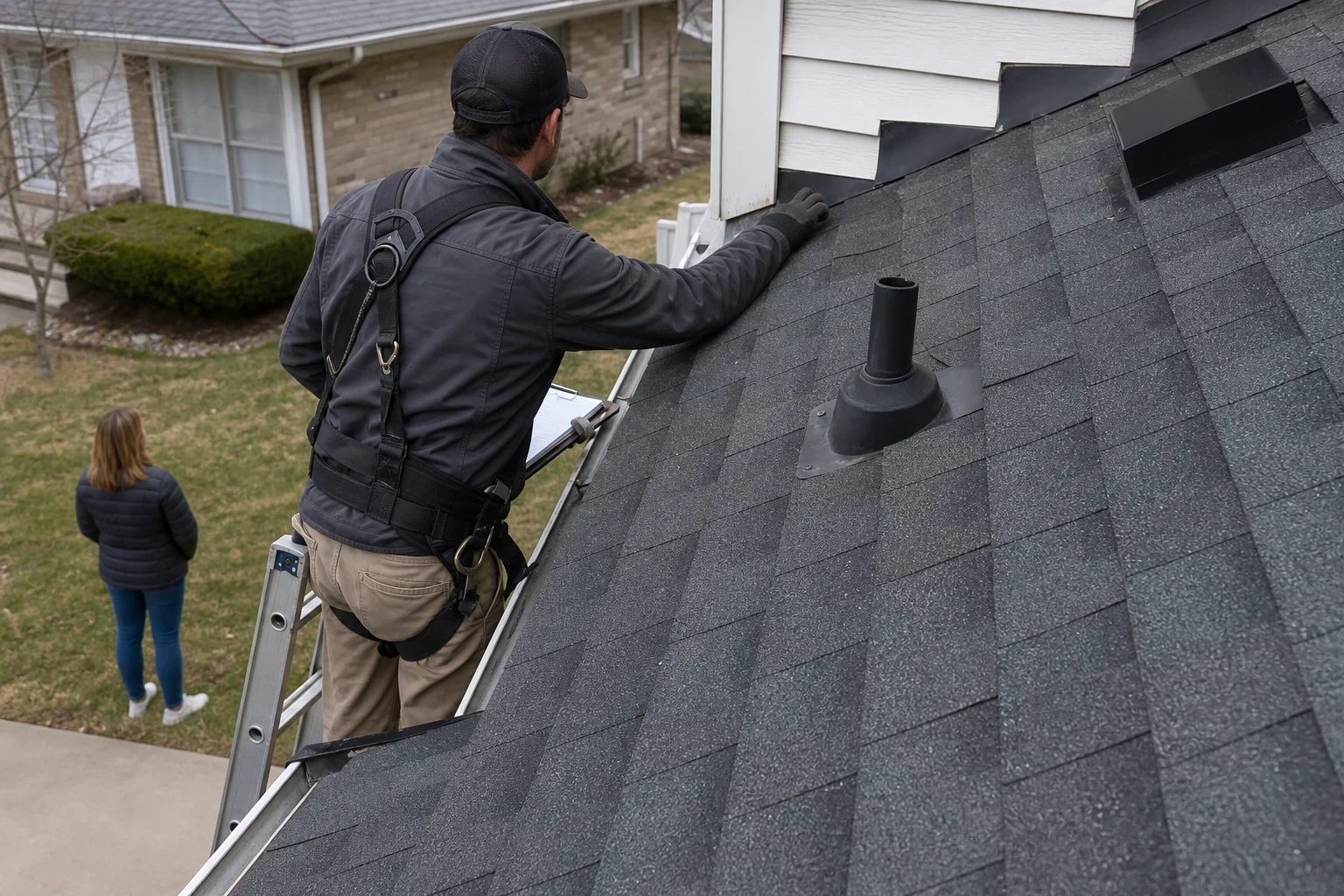
What a Close Look at Your Roof Tells You
A roof rarely fails all at once. It fails at its weak points: a cracked neoprene collar on a plumbing vent, a lifted step flashing along a sidewall, a valley where granules have washed off and the asphalt mat is exposed. A careful check catches those points while they are still small, and sorts out which ones matter now and which can wait.
We look first and recommend second. You get photos of each trouble spot, the likely cause and a straight call on whether a patch will buy you real years or the shingles have aged past saving. If the roof is sound, we tell you that and leave it alone.
It is the right first step if you have a leak you cannot trace, a roof past fifteen years, a storm that just came through, or a home sale on the calendar. Repeated freeze-thaw cycles through a Northern Kentucky winter loosen sealant strips and open small gaps, so a spring check catches what the cold started.
What We Check on Your Roof
- Shingle condition
- We look for granule loss, cracking, curling, cupping and tabs that have lost their seal. We also check for nail pops, where a fastener backs out and pushes up through the shingle above it.
- Flashing and valleys
- Step flashing, counterflashing, chimney flashing and valley metal are where most leaks start. We check for gaps, rust, failed caulk and flashing that was face-nailed instead of tucked under the shingle course.
- Roof penetrations
- Plumbing vent boots, exhaust caps, skylights and satellite mounts each put a hole through your roof. Rubber boots dry out and split after years of sun, so we check every one.
- Ventilation and attic
- We compare intake at the soffits with exhaust at the ridge or box vents. In the attic we look for water staining, dark or damp sheathing, daylight at nail holes and frost marks that point to trapped moisture.
- Decking and roof plane
- We walk the roof for soft spots and sight along each plane for sagging. Soft decking usually means water has been getting in for a while, and it changes what a repair involves.
- Gutters and drip edge
- Granules collecting in the gutters, a missing drip edge or water spilling behind the fascia all show up here. Gutter problems can rot the roof edge from below.
Signs Your Roof Is Due for a Close Look
A stain on a ceiling or wall
Brown rings on drywall mean water has already traveled past the roof deck. The opening on the roof is often several feet uphill from the stain, which is why we trace it before anyone patches anything.
Granules in your gutters or downspouts
Shingles shed some granules early on, but heavy buildup on an older roof means the asphalt is losing its UV protection and aging faster.
Shingles that curl, cup or are missing
Curled edges catch wind and lift. A missing shingle exposes underlayment that was never meant to face weather on its own.
After hail or high wind
Hail bruises can be hard to see from the ground, and wind can break the seal on shingles that still look flat. Getting up close tells you whether you have damage worth reporting.
Ice dams last winter
Ice building along the eaves points to heat escaping into the attic and melting snow from below. That water can back up under shingles, so we check both the roof edge and the attic ventilation.
Buying, selling or unsure of the roof's age
A documented condition report helps you plan a budget or answer a buyer's questions with photos instead of guesses.
How Your Visit Runs
- 1
A short phone call
We ask what prompted the call, the roof's approximate age and any leaks or past repairs you know about. Then we set a time that works for you.
- 2
Ground walk and gutters
We start outside, looking at the roof lines, gutters, downspouts, fascia and siding where it meets the roof. This shows sagging, drainage problems and staining before we ever climb.
- 3
On the roof
We are licensed and insured, and we use proper ladder setup and fall protection on steep pitches. We photograph each problem with something nearby for scale, so you can judge its size yourself.
- 4
Attic check
If you have an accessible attic hatch, we look at the underside of the decking, insulation, vent openings and any water trails. This often confirms where a leak actually enters.
- 5
Photos first, then options
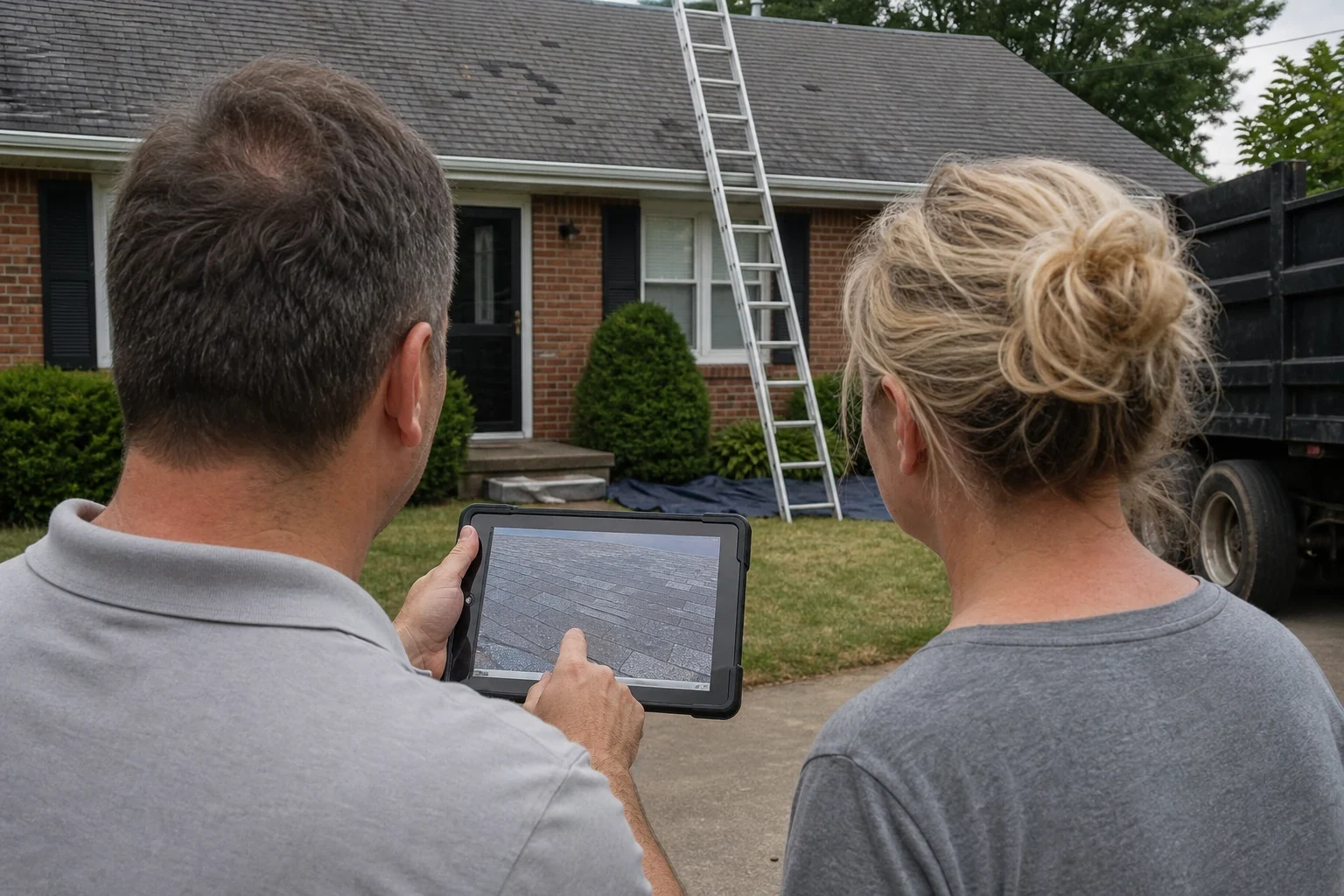
We go through the pictures with you, explain the cause of each problem and rank what is urgent. If work is needed, we give you a free estimate and tell you plainly whether roof repair will do or roof replacement makes more sense.
What Affects the Cost of Work We Uncover
The roof check itself is free, with no obligation. If something needs fixing, the estimate depends on what is actually wrong, which is why we look before we price anything. New customers can also use our Limited Time — $50 Off Your First Service Call offer.
- Extent and location of damage
- A single failed pipe boot is a small job. Flashing problems along a chimney or a long sidewall take more labor because shingles have to come up and go back down correctly.
- Condition of the decking
- If water has softened the plywood or plank sheathing, those sections have to be replaced before new materials go on. We cannot always know this until boards are exposed, so we point out soft spots during the visit.
- Pitch, height and access
- Steep roofs need more safety setup and move slower. Multiple stories, dormers and tight access around trees or neighboring houses add time.
- Materials and matching
- Architectural shingles, three-tab shingles and specialty materials differ in cost, and matching an older discontinued shingle can limit options on a repair.
Roof Check Questions
Something not covered here? (859) 251-7387
How long does a roof inspection take?
Most take about an hour, sometimes longer on a large or steep roof or when we spend time in the attic. Afterward we sit down with you to go over the photos. You do not need to prepare anything beyond clearing a path to the attic hatch if you have one.
Is the roof check really free?
Yes. There is no charge and no obligation to hire us afterward. You keep the photos and notes either way, and you are welcome to get another opinion.
Will you try to sell me a new roof?
We recommend replacement only when the roof itself makes the case, such as widespread granule loss, brittle shingles that crack when lifted, or soft decking across large areas. If a targeted repair will hold for years, we say so and price that instead.
Will this help if I need to file an insurance claim?
It can. We take dated pictures of any hail bruising, lifted tabs or torn flashing, with notes on where each spot sits on the roof, and you can pass those along to your insurer. We walk you through how claims usually move, but the adjuster decides what is covered. If storm damage is confirmed, our storm damage repair page explains what happens next.
Does someone have to be at the house during the visit?
Not for the outside portion. We can check the shingles, flashing and gutters while you are at work, then review the photos together over the phone. The attic is the exception, since we need someone to open the house and point us to the hatch. Being there also lets you see the trouble spots on the screen as we explain them.
If you find a problem, is the repair work covered?
Repair and replacement work we perform carries a 10-year labor warranty. We explain what that covers when we give you the estimate, so you know before any work starts.
Find Out What Your Roof Actually Needs
We will go over every part of your roof, take pictures of anything worth your attention and tell you what caused it in everyday words. What happens after that is your call, and nobody will push you.