ServicesGutters
Gutter Repair and Installation in Fort Wright
Most gutter trouble is a pitch, hanger or downspout problem, not a gutter problem. We put a level on the run, water-test the outlets and check the fascia, then tell you plainly whether a repair will hold or the system should be replaced.
What Your Gutters Actually Do
A gutter has one job: catch the water coming off the drip edge and move it far enough from your foundation that it never soaks back toward the basement wall. When it fails, the damage rarely shows up in the gutter itself. It shows up as rotted fascia, peeling trim, stained siding, eroded beds and damp basement corners.
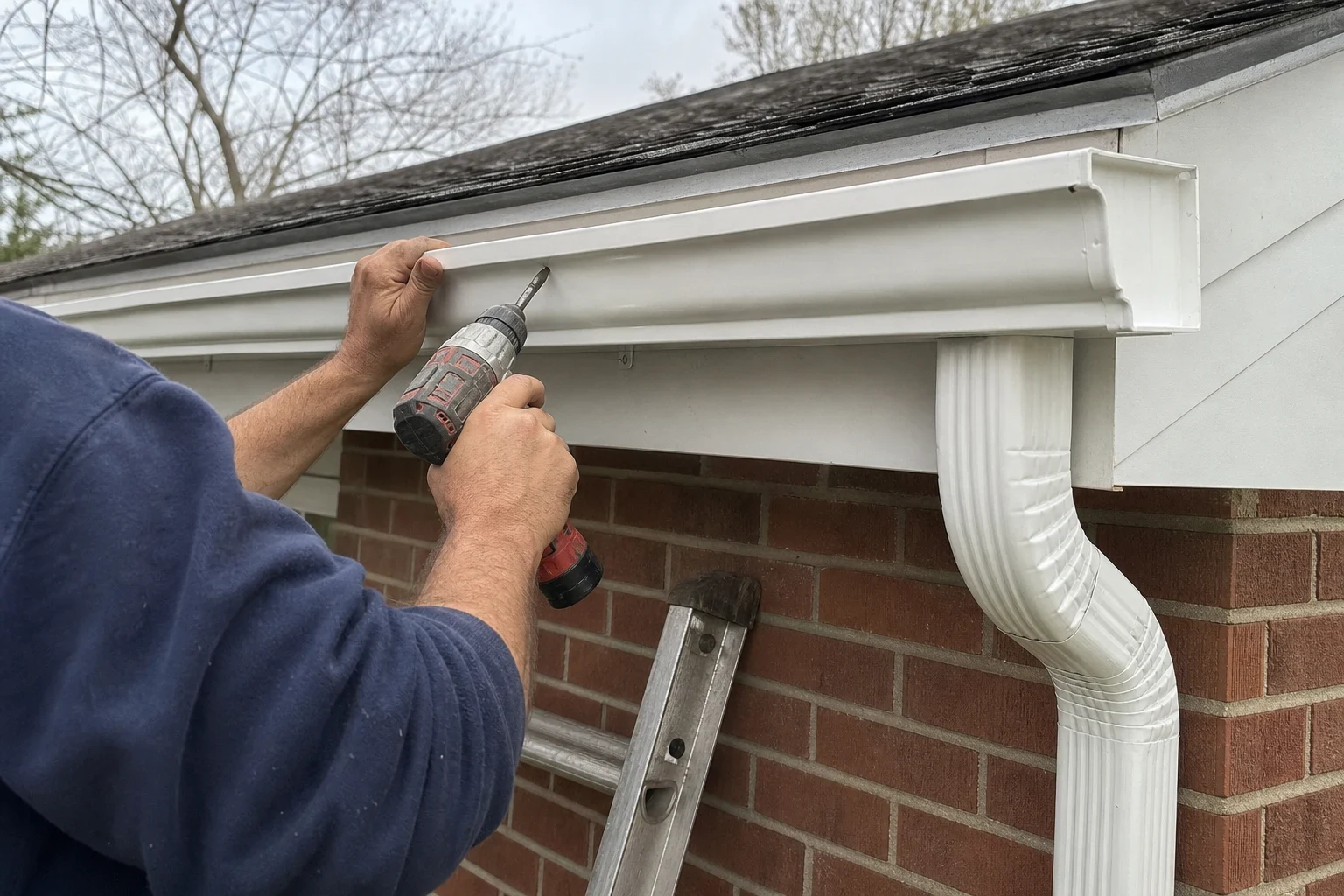
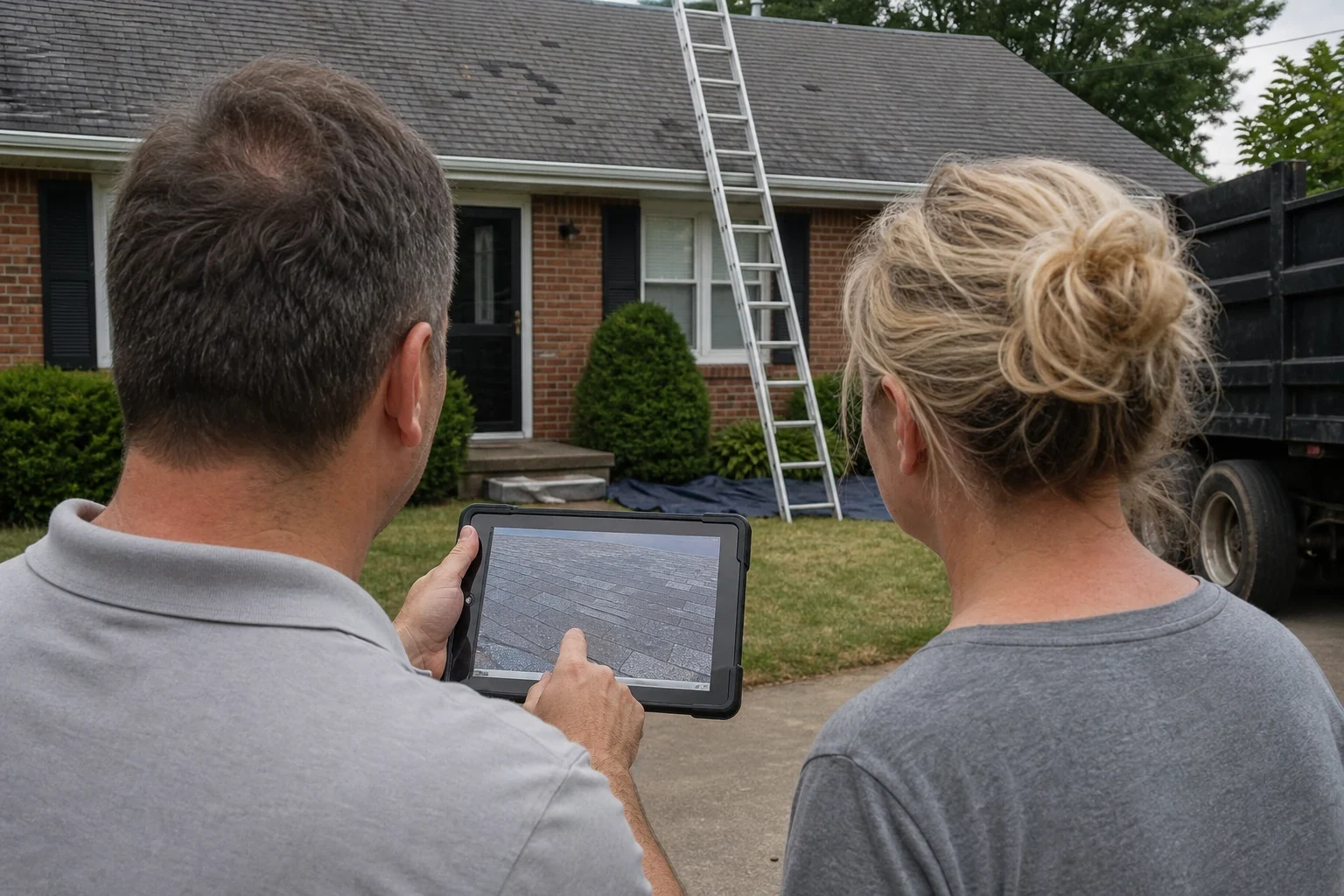
We start every gutter job with an inspection, not a sales sheet. We check the slope toward each outlet, how the hangers are fastened, whether the downspouts can carry the volume your roof sheds, and whether the drip edge actually laps into the trough. You hear what we found, with photos, before we recommend anything.
The Parts of a Gutter Job We Handle
- Seamless gutters formed to length
- Our machine forms each length of K-style aluminum from coil right in your driveway, cut to match the eave it will hang on. The only joints are at corners and end caps, which means fewer sealed seams to dry out and split over the years. Trough width, typically 5-inch or 6-inch, is chosen from the roof area and slope that drain into that run.
- Downspouts and outlets
- An undersized downspout makes a correctly sized gutter overflow. We place outlets so no run carries more water than it can handle, and we add extensions or splash blocks to move discharge away from the foundation.
- Hidden hangers, fastened into framing
- Old spike-and-ferrule systems loosen as the wood shrinks and swells. We use hidden hangers screwed through the fascia into the rafter tails, spaced closely enough to carry wet leaves and winter ice.
- Re-pitching and rehanging
- If the gutter itself is sound but water stands in the middle of a run, we reset the slope toward the outlet instead of replacing good metal.
- Miter and end cap repair
- We clean failed joints down to bare metal and reseal them with gutter sealant, then water-test the repair before we leave.
- Fascia and drip edge check
- Soft fascia will not hold a hanger. We probe the boards behind the gutter and tell you if any need replacing before new gutters go up, and we confirm the drip edge sends water into the trough rather than behind it.
Signs Your Gutters Need Attention
Overflow at inside corners
Corners collect the most water and debris. Regular overflow there points to a clogged outlet, too few downspouts or a trough that is too small.
Dips and gaps at the fascia
If a section bows in the middle or a gap opens between the back of the gutter and the board, the fasteners or the wood holding them have let go. Every soaking rain adds weight and pulls it further.
Streaks and water lines on siding
Dirty vertical stripes under the gutter mean water is running behind it or over the front edge. That moisture works into trim and sheathing.
Peeling paint or soft fascia
Paint lifting off the fascia board is often the first visible sign of wood rot from a leaking joint or a missing drip edge.
Washed-out beds or a damp basement corner
Water dumping at the foundation, especially on a sloped Northern Kentucky lot, saturates soil against the wall. Check where your downspouts discharge.
Icicles and ice along the edge
Heavy ice in the gutters can mean standing water from poor pitch, or heat loss in the attic. We look at both before suggesting a fix.
What Moves the Price of Gutters
Gutter pricing comes mostly from measured footage and how hard the edges are to reach. Repairs depend on how many problems the inspection turns up. We give you a written estimate after we have measured, so the number reflects your house rather than a rule of thumb.
Linear footage and stories
Longer runs need more material, and second-story or steep-yard edges take more setup and time on the ladder.
Gutter size and downspout count
Moving from 5-inch to 6-inch gutters, or adding outlets and downspouts, raises material cost but often solves recurring overflow.
Corners and roof complexity
Each inside and outside miter is cut and sealed by hand. A roofline with many breaks costs more than a straight ranch eave.
Fascia condition
Rotted boards have to be replaced before new hangers can hold. We show you which sections are soft and price them separately.
Removal and disposal
Taking down old gutters, especially multiple layers of patched sections, adds labor that we list on its own line.
How a Gutter Job Runs
- 1
Inspection and water test
We set ladders, measure every run, check slope with a level and run a hose at the high end of each section to watch where the water actually goes. We also look at the roof edge, since shingles and drip edge affect how gutters perform.
- 2
Plain findings and a written estimate
You get photos, the cause of each problem and a line-item estimate. If re-pitching and resealing will solve it, that is what we recommend.
- 3
Installation day
We remove old gutters, repair any fascia we agreed on, then form, hang and pitch the new system. Most homes are done in one visit, working from the outside only.
- 4
Flow check and cleanup
We water-test every outlet, walk the yard for screws and metal scraps, and haul off the old gutters. Before we pack up, we show you where each downspout now discharges.
Gutter Questions We Hear Often
Can my gutters be repaired, or do they need replacing?
Often they can be repaired. Sagging from loose spikes, leaking joints and bad pitch are fixable if the metal is sound. If the gutters are undersized, badly dented or patched in many places, replacement usually costs less over time. We tell you which after the water test.
Is it worth doing new gutters along with a new roof?
Usually, yes. A reroof means pulling the old drip edge anyway, so that is the cleanest moment to hang fresh gutters against new drip edge and fascia we have already checked. If your current gutters are still sound, we tell you that and leave them in place.
Do I need 5-inch or 6-inch gutters?
We work it out from how many square feet of roof feed each run and how fast the pitch delivers that water. A large, steep plane sends a lot of water at once, which usually calls for 6-inch troughs and bigger downspouts. Smaller, low-slope sections often do fine with 5-inch. We measure before we recommend either.
Who works on my gutters, and what if someone gets hurt on a ladder?
Our own crew does the work, including second-story eaves. We are licensed and insured, so a ladder accident or a dented downspout during the job is our responsibility, not yours.
What warranty comes with new gutters?
Our installation work comes with a 10-year labor warranty. If a hanger, joint or outlet we installed fails because of how it was put in, we come back and correct it.
Find Out Why the Water Isn't Going Where It Should
We will measure, water-test and look behind your gutters, then explain what we found before quoting anything. The estimate is free.